by
by Turning 60 has a way of making you reflective—maybe a little more than you intended.
Writing last week’s post, and even sitting down to write this one, reminds me of that scene from Jerry Maguire where he pours out everything he believes about life and work, prints it up, and sends it out into the world… and then immediately wonders if he went too far. When people start reacting, he shrugs it off with, “It was just a mission statement.”
I get that feeling a little bit. Like maybe you’ve said more than you planned to. But maybe that’s not such a bad thing. Maybe taking the time to put a few thoughts down—about life, about what matters—is worth it, even if it feels a little exposed.
Because if there’s one thing that becomes clearer over time, it’s this: life isn’t easy. And it’s not supposed to be.
That’s not a complaint. It’s just an observation you earn.
When you’re younger, you don’t really think in those terms. You just go. You don’t overanalyze. You don’t measure effort the same way. You certainly don’t spend much time wondering if something is “too hard.” You just do it.
I think back to summers at Camp Cherokee on Lake Burton. Some of my best memories are from that place, especially with my buddy Frank Reinstine. There was a simplicity to those days, but also a kind of quiet toughness built into everything we did.
One memory stands out more than most—the two-mile swim to the Lake Burton dam.
The first day, Frank wasn’t interested. I went with another camper, for the helicopter Moms reading this, we had a counselor paddling alongside us in a canoe. The next day, Frank decided he was in after all—but the rule was you had to go in pairs. So I turned around and did it again, swimming alongside him, again with a counselor keeping pace nearby.
I remember Ross McConnell telling me he was a little concerned I might get fatigued.
The truth is, I didn’t even really know what that meant.
That’s not a statement about toughness—it’s more about perspective. At that age, you don’t label things the same way. You don’t stop and ask if something is going to be difficult or tiring. You just start swimming and figure it out as you go.
Somewhere along the way, we all learn what “fatigue” means. Life has a way of teaching that lesson pretty thoroughly. Responsibilities stack up. Plans don’t always work out. You realize effort has a cost.
But if you stay with it long enough, you also learn something else: the effort is where the value is.
Not in a loud, obvious way. Not in a way that always gets recognized. But in the quiet accumulation of days where you chose to keep going. Where you didn’t turn back early. Where you pushed through when it would’ve been easier not to.
That’s where life starts to take shape.

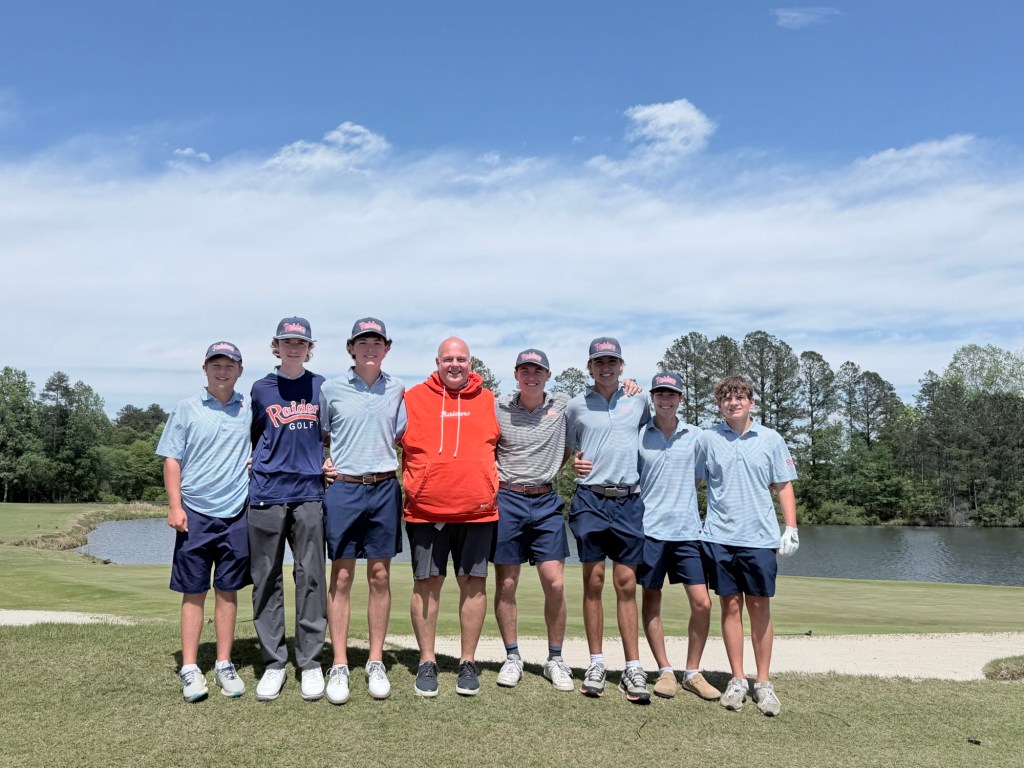
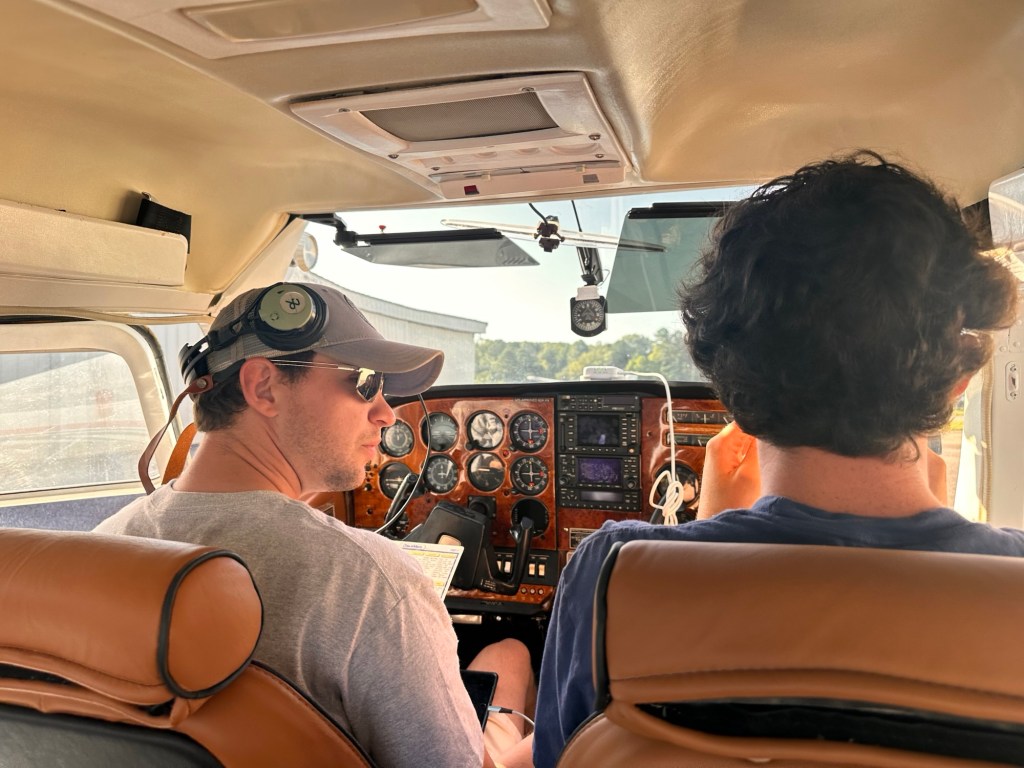
Amy and I have had a front-row seat to that journey. Jack is about to graduate high school and head off to play golf at Truett McConnell University (I don’t think there’s any relation to Camp Cherokee Director Ross McConnell, but ironic, nonetheless). That didn’t happen overnight—it’s the result of years of practice, discipline, and learning how to push through the tough days. Claire is navigating life with confidence, making upward job changes, growing, and genuinely happy in who she is. Blake is chasing dreams and the sky—literally—with all his flying ratings in hand and a wide open future in front of him. And Cate, in 10th grade, is hitting her stride as a student, with a curiosity and drive that makes us excited about what’s ahead for her.
None of that came easy. And that’s exactly the point.
The pride isn’t about outcomes or milestones as much as it is about the way they’ve each learned to engage with life—to take it on, even when it’s hard. To keep moving forward without any guarantee of how things will turn out.
That’s the part that feels meaningful.
Because over time, your definition of success changes. You start to value the willingness to try more than the result. The resilience more than the recognition. The consistency more than the occasional win.
And maybe that’s what these reflections—these “mission statements,” if you will—are really about.
Not having all the answers. Not pretending life has been perfectly figured out. But simply acknowledging that the path has been worth it. That the hard parts weren’t detours—they were the road.
Theodore Roosevelt once said that he did not admire the life of ease, and that the highest reward belonged to those who chose “the strenuous life”—a life of effort, of responsibility, and of purpose, where meaning is found not in comfort, but in doing the hard things well.
At 60, that doesn’t feel like a quote to hang on a wall. It feels like something you’ve seen play out, over and over again. In your own life, and in the lives of the people you care about most.
Life isn’t easy. It never was.
But the rewards of showing up, putting in the work, and staying in it—those are real. And they have a way of revealing themselves over time, often in ways you couldn’t have planned.
Looking back, I’m not sure I’d change much—even the hard parts.
Because somewhere between not knowing what fatigue meant and understanding it all too well, you begin to see what really matters.
And it turns out, it was never about ease at all.